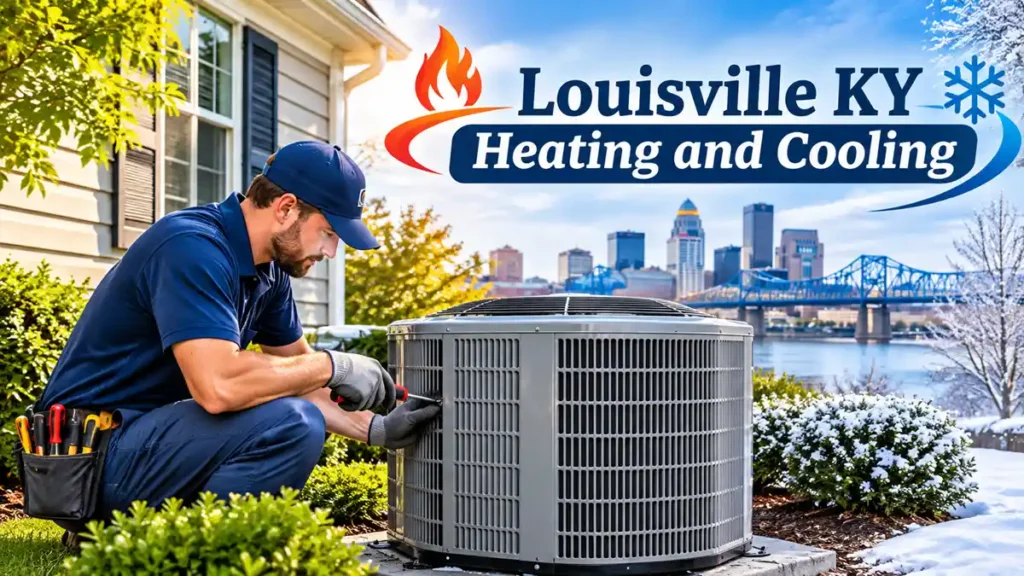
TL;DR: Louisville KY heating and cooling systems face a unique double stress: humid, 90-plus-degree summers and winters that regularly drop to 27°F or lower. A properly sized, well-maintained HVAC system handles both extremes without running up your energy bill. This guide covers pricing, efficiency standards, repair vs. replace decisions, and how to evaluate local companies and reviews before you hire.
The Ohio River valley does not do mild weather. One month you’re running the air conditioner around the clock to fight 95-degree humidity, and a few weeks later you’re waking up to frost on the windshield. Louisville KY heating and cooling needs differ from drier, milder climates because your equipment works harder on both ends of the thermostat. On recent service calls across Louisville, our Local Gov Certified technicians have seen firsthand how quickly an undersized or neglected system buckles under these swings.
This guide walks through what homeowners in Louisville and the surrounding counties actually need to know: what a reliable system looks like, what Louisville ky heating and cooling prices typically run, how to read company reviews without getting fooled, and when a repair beats a full replacement. Every recommendation below reflects what we see on actual jobs, not generic national averages.
Key Takeaways
- Louisville’s climate zone (ENERGY STAR Zone 4) demands systems rated for both high humidity cooling loads and sub-freezing heating demand, so a one-size-fits-all unit rarely performs well here.
- AC repair typically costs $150 to $500+, while a full AC replacement runs $3,500 to $8,000+ depending on size and efficiency tier.
- The 50% rule (if repair costs exceed half the price of replacement, replace the system) applies just as well to furnaces and heat pumps as it does to any other home appliance.
Why Louisville’s Climate Demands a Reliable HVAC System
Louisville’s weather punishes HVAC equipment twice a year. Summers bring highs in the low-to-mid 90s°F combined with heavy Ohio River valley humidity, which forces air conditioners to pull moisture out of the air as hard as they pull out heat. Winters bring January lows averaging 27°F, with cold snaps that drop well below that mark and push furnaces and heat pumps to their limits.
Kentucky sits in ENERGY STAR Climate Zone 4, a designation that reflects this mixed-humid profile. Systems built for drier Southwestern climates or for consistently cold Northern climates are not calibrated for Louisville’s swings. A furnace sized for a mild winter in another region will often short-cycle here, and an AC sized without accounting for humidity will run constantly without fully cooling the home.
Our Local Gov Certified technicians frequently see this mismatch in homes that inherited equipment installed by an out-of-town contractor unfamiliar with local load calculations. Correct sizing, done through a Manual J load calculation, matters more in Louisville than in climates with less seasonal variation.

Louisville KY Heating and Cooling Services Overview
Louisville KY heating and cooling work spans far more than emergency repairs. The table below breaks down the core service categories homeowners request most often.
| Service Category | What It Covers | Typical Urgency |
|---|---|---|
| AC repair | Diagnosing and fixing a system that won’t cool, trips breakers, or runs constantly | High in summer |
| AC installation and replacement | Removing a failed or aging unit and installing a correctly sized new system | Planned or emergency |
| Furnace repair | Fixing ignition failures, airflow problems, or units that cycle without heating | High in winter |
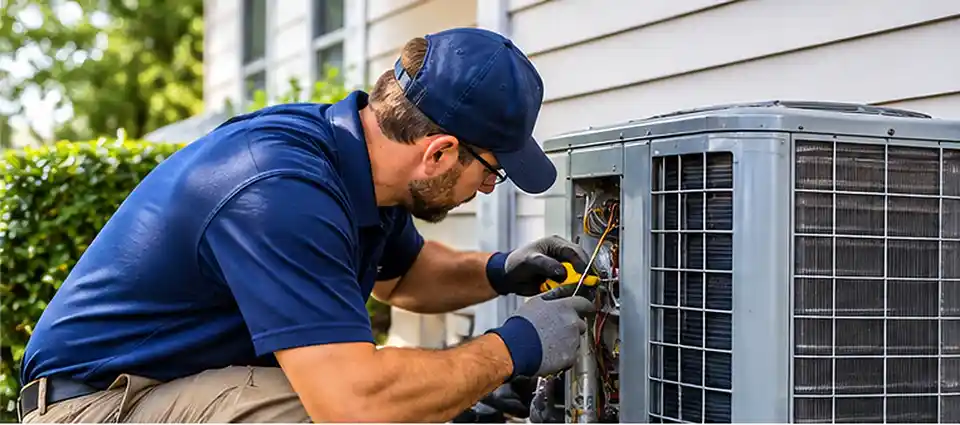
| Heat pump maintenance | Seasonal checks on refrigerant levels, defrost cycles, and backup heat strips | Planned, twice yearly |
| Ductwork and airflow repair | Sealing leaks, correcting undersized runs, balancing supply and return air | Moderate |
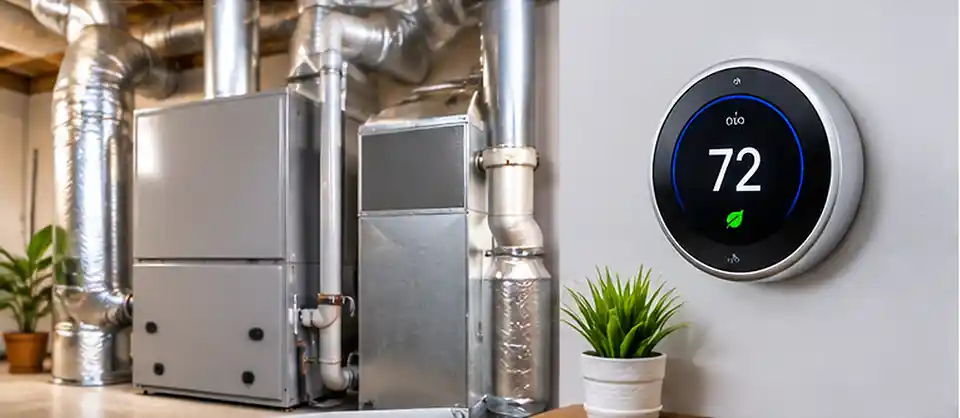
| Thermostat installation | Upgrading to smart or programmable controls, wiring compatibility checks | Low to moderate |
| Indoor air quality upgrades | Humidifiers, dehumidifiers, filtration, and ventilation improvements | Moderate |
| Emergency repair | After-hours response for no-heat or no-cool situations in dangerous weather | Highest |
If you’re not sure which category fits your situation, our full lineup of residential HVAC services breaks each one down with warning signs and typical fixes.
Backup Generator Service Louisville KY: Protect Your HVAC
HVAC System Efficiency Standards for Louisville Homes
Efficiency ratings tell you how much cooling or heating output you get for the energy you put in. The U.S. Department of Energy raised minimum efficiency standards effective January 2023, and the South and Southeast region, which includes Kentucky, now requires a minimum SEER2 of 14.3 for new central air conditioners.
| System Type | Rating Used | Federal Minimum | ENERGY STAR Certified |
|---|---|---|---|
| Central air conditioner | SEER2 | 14.3 | 15.2+ |
| Gas furnace | AFUE | 80% | 90%+ |
| Heat pump (heating) | HSPF2 | 7.5 | 8.1+ |
| Heat pump (cooling) | SEER2 | 14.3 | 15.2+ |
SEER (Seasonal Energy Efficiency Ratio) measures cooling output relative to electricity used over a season. AFUE (Annual Fuel Utilization Efficiency) measures what percentage of fuel a furnace converts into usable heat, so an 80% AFUE furnace wastes 20% of the fuel it burns as exhaust. HSPF (Heating Seasonal Performance Factor) measures a heat pump’s heating efficiency the same way SEER measures cooling. According to the U.S. Department of Energy, choosing equipment that exceeds the federal minimum pays back through lower utility bills over the system’s lifespan, which matters more in a climate like Louisville’s that demands heavy use of both heating and cooling.
Louisville KY Heating and Cooling Prices What to Expect
Louisville ky heating and cooling prices vary by system type, size, and efficiency tier. The ranges below reflect what we typically see across the greater Louisville market.
| Service | Typical Cost Range |
|---|---|
| AC repair | $150-$500+ |
| New AC system installation | $3,500-$8,000+ |
| Furnace repair | $100-$600+ |
| New furnace installation | $2,500-$6,000+ |
| Heat pump installation | $4,000-$9,000+ |
| Annual maintenance plan | Varies by provider |
These figures assume standard residential installs. Older homes with duct modifications, electrical upgrades, or difficult attic access often land toward the higher end of each range. Many providers, including those our Local Gov Certified technicians work alongside, offer financing or maintenance plans that spread these costs out, so ask about payment options before assuming a repair or replacement is out of reach.

Repair vs. Replace Making the Right Call
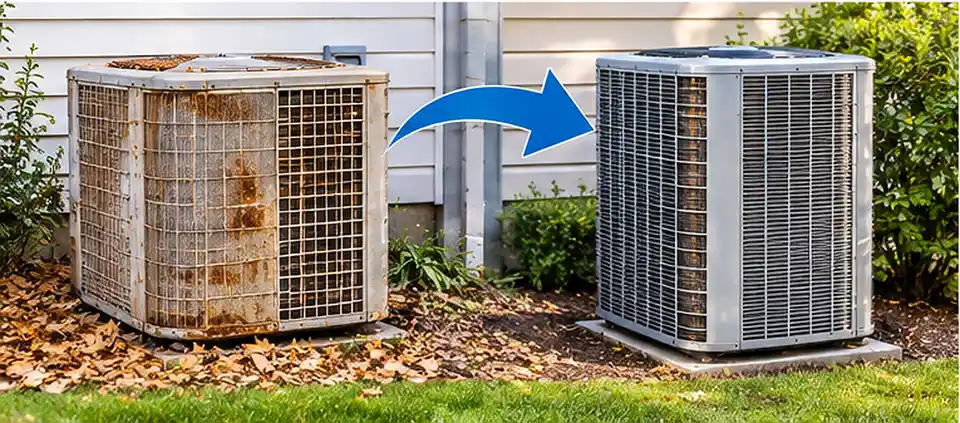
A failing system does not always mean you need a new one. Apply the 50% rule: if the repair cost exceeds half the price of a comparable new system, replacement is usually the smarter long-term choice.
| Factor | Lean Toward Repair | Lean Toward Replace |
|---|---|---|
| System age | Under 10 years | Over 15 years |
| Repair cost | Under 50% of replacement cost | Over 50% of replacement cost |
| Repair frequency | First major issue | Multiple breakdowns in two years |
| Efficiency | Meets current SEER2/AFUE minimums | Well below current standards |
| Refrigerant type | Uses current refrigerant | Uses phased-out R-22 refrigerant |
Expected system lifespan also factors into this decision heavily.
| System Type | Typical Lifespan |
|---|---|
| Central air conditioner | 12-15 years |
| Gas furnace | 15-20 years |
| Heat pump | 10-15 years |
| Ductless mini-split | 15-20 years |
A 12-year-old air conditioner needing a $1,800 compressor replacement is a textbook case for choosing a new system instead, especially when that repair cost approaches a third of a full replacement. A 3-year-old unit with a failed capacitor, by contrast, is an easy repair call every time.
Common HVAC Problems Louisville Homeowners Face
Certain problems show up again and again across Louisville neighborhoods, largely because of the climate swings discussed earlier.
- AC running but the house stays warm. Usually traced to a clogged filter, low refrigerant, or a failing capacitor.
- Warm air blowing from vents. Often a thermostat set to the wrong mode, a tripped breaker, or a stopped outdoor unit.
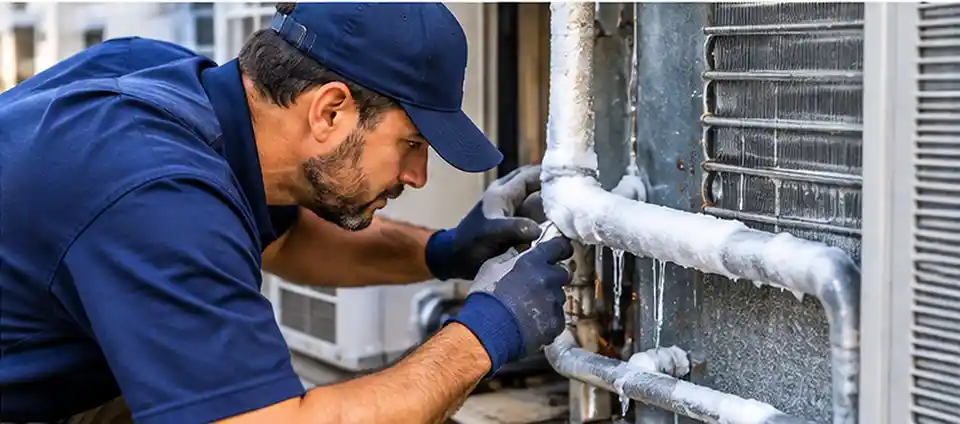
- Ice forming on refrigerant lines. Points to restricted airflow or low refrigerant charge.
- Furnace won’t heat on a cold morning. Commonly an ignition fault, a dead thermostat battery, or a tripped safety switch.
- Heat pump stuck blowing cool air. Sometimes this is just a normal defrost cycle, not a malfunction.
- Water pooling near the indoor unit. Typically a clogged condensate drain line.
Each of these symptoms has safe checks you can try before calling a technician. Our full HVAC troubleshooting library walks through the likely causes and when a problem crosses the line into professional territory.
Louisville KY Heating and Cooling Companies How to Choose
Louisville ky heating and cooling companies number in the thousands when you count every BBB-listed heating and air business across the metro, so narrowing the field matters. Look for these qualities before you commit to a provider.
- Licensing and insurance. Kentucky HVAC contractors are licensed through the state Department of Housing, Buildings and Construction, which maintains a searchable license database.
- Local tenure. Companies with 20, 40, or even 60-plus years serving Louisville, like several long-standing family-owned operations in the area, understand the river valley’s specific climate stresses.
- Manufacturer certifications. Designations like NATE certification (North American Technician Excellence) or brand-specific status such as Trane Comfort Specialist indicate ongoing training.
- Transparent, written estimates. A reputable company quotes the job in writing before work begins.
- A+ BBB rating with recent activity. An old A+ rating with no recent reviews tells you less than one with steady, current feedback.
Checking a company’s standing takes a few extra minutes but prevents a much bigger headache if a job goes wrong.
Louisville KY Heating and Cooling Reviews What They Really Tell You
Louisville ky heating and cooling reviews are only useful if you know what to look for beyond the star rating. A five-star average with vague comments tells you far less than a four-star average with specific, detailed feedback.
| Green Flag | Red Flag |
|---|---|
| Names the specific part replaced and its cost | Vague praise with no detail (“great service!”) |
| Technician explained the root cause | Immediate push toward full replacement |
| Reviews posted within the last six months | All reviews dated years ago |
| Owner or company responds to negative reviews | Complaints left unanswered |
| Mentions the arrival window was honored | Repeated no-show complaints |
| Diagnostic fee credited toward the repair | Surprise charges on the final invoice |
A pattern of recent, detailed reviews, positive or negative, tells you more about a company’s current performance than any single rating does. Watch especially for how a company responds publicly to a bad review. That response often reveals more about their standards than the complaint itself.
Seasonal HVAC Maintenance Checklist for Louisville, KY
Routine maintenance keeps a system running efficiently through both Louisville extremes. Follow this checklist each spring and fall.
Spring (before cooling season):
- Replace or clean the air filter.
- Clear debris, leaves, and grass clippings from around the outdoor condenser unit.
- Check refrigerant levels and inspect for leaks.
- Test the thermostat and confirm cooling mode responds correctly.
- Clean the condensate drain line to prevent clogs.
Fall (before heating season):
- Inspect the heat exchanger for cracks on gas furnaces.
- Test the ignition system and flame sensor.
- Check ductwork for leaks or disconnected sections.
- Confirm carbon monoxide detectors near the furnace are working.
- For heat pumps, verify the defrost cycle and backup heat strips function properly.
According to the ENERGY STAR program, seasonal maintenance alone can prevent a measurable share of the efficiency loss that builds up in neglected systems over time. Skipping these checks for even one season often shows up as a higher utility bill before it shows up as an outright failure.
Louisville KY Heating and Cooling Phone Number & Contact Info
When your system fails on a 95-degree afternoon or a 20-degree morning, you need a fast way to reach help. The Louisville ky heating and cooling phone number at HVAC Service Louisville connects you directly with Local Gov Certified providers who serve your part of the metro. Call (727) 513-6521 and describe what the system is doing, what kind of equipment you have, and anything you’ve already checked.
At HVAC Service Louisville, we route homeowner calls to independent, local HVAC providers rather than asking you to sort through dozens of company websites on your own. The call can’t help with billing questions or service that’s already scheduled with another company, but for a new repair, replacement, or installation, it’s the fastest starting point.
Service Areas We Cover Across Greater Louisville
Coverage extends well beyond the Louisville city limits. Homeowners across Fairdale, Glenview, and Prospect, KY fall within the core Louisville market, alongside nearby counties including Oldham, Bullitt, Shelby, and Henry. Our service area map breaks down coverage by market and smaller area, including Lexington and the Bluegrass, Elizabethtown and Hardin County, and Southern Indiana communities like Jeffersonville and Clarksville.
If your address falls outside the immediate city, don’t assume you’re out of reach. Many providers in our network cover rural and suburban addresses that national chains skip entirely, and coverage for your specific address gets confirmed directly on the call.
Frequently Asked Questions
How much does AC repair cost in Louisville, KY?
Most AC repairs in Louisville run $150 to $500 or more, depending on the part needed. A capacitor or contactor replacement sits at the low end, while a compressor or coil repair runs significantly higher.
What is the Louisville KY heating and cooling phone number?
Call (727) 513-6521 to connect with a Local Gov Certified HVAC provider serving Louisville and the surrounding counties.
How do I know if I should repair or replace my furnace?
Apply the 50% rule: if the repair quote exceeds half the cost of a new furnace, and your current unit is past 15 years old, replacement is typically the better long-term value.
Are Louisville KY heating and cooling reviews reliable?
Reviews are reliable when they include specific details like part names, pricing, and recent dates. Vague, generic praise or complaints with no company response are less trustworthy indicators.
What SEER rating do I need for a new AC in Louisville?
Federal law requires a minimum SEER2 of 14.3 for new central air conditioners installed in Kentucky as of January 2023. ENERGY STAR certified units exceed that minimum, typically starting around 15.2.
How often should I schedule HVAC maintenance in Louisville?
Twice yearly: once in spring before cooling season begins, and once in fall before heating season begins. This matches Louisville’s two demanding weather extremes.
Get Connected With a Local Provider Today
Louisville’s hot, humid summers and sharp winter cold snaps leave little room for a poorly maintained or incorrectly sized HVAC system. Whether you’re dealing with a furnace that won’t fire on a frigid morning or an air conditioner that can’t keep up with August humidity, the fastest path forward starts with one call. Reach HVAC Service Louisville at (727) 513-6521 and get matched with a Local Gov Certified provider who understands exactly what this climate demands.